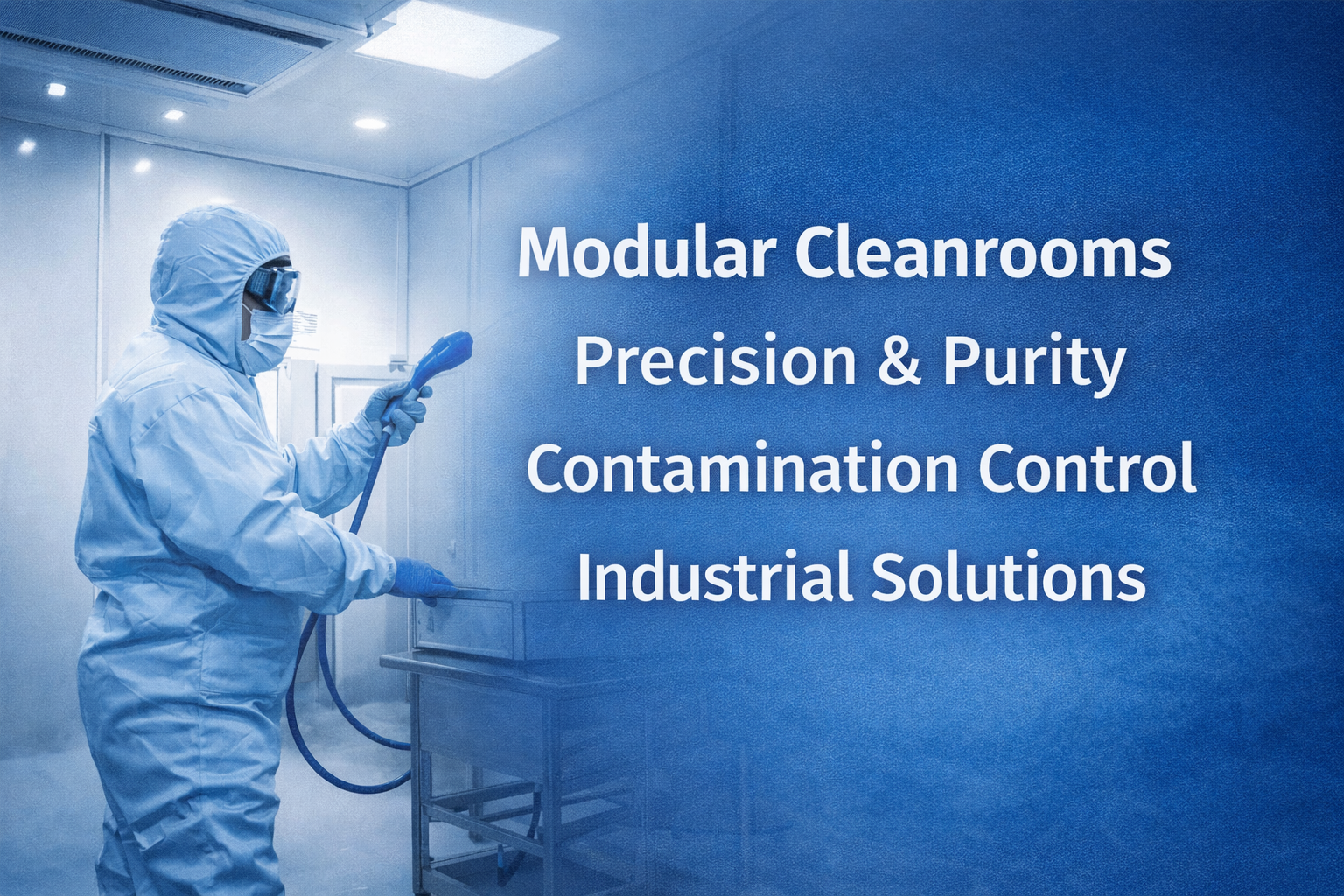
Embarking on the journey to design and construct a modular cleanroom is a critical undertaking, essential for industries where precision, purity, and product integrity are paramount. Whether your focus is on developing life-saving pharmaceuticals, cutting-edge semiconductors, or advanced medical devices, the controlled environment of a cleanroom is not merely a facility but a fundamental prerequisite for success. This comprehensive guide will navigate you through the intricacies of cleanroom design and construction, from understanding the foundational principles of cleanliness to implementing advanced filtration systems and selecting appropriate construction methodologies. By the end of this guide, you will possess the knowledge to conceptualize, plan, and oversee the creation of a cleanroom that meets stringent industry standards, protects your valuable products from insidious contaminants, and ultimately drives innovation and market competitiveness. This guide is designed for project managers, engineers, facility planners, and anyone involved in establishing or upgrading controlled environments, providing a clear roadmap to achieving optimal purity and performance.
Understanding Cleanroom Fundamentals
At its core, a cleanroom is more than just a sterile space; it is a meticulously engineered environment designed to control airborne particulate contamination to a specified level. The necessity for such controlled conditions arises from the increasing sensitivity of modern manufacturing processes and the demand for ultra-pure products across a spectrum of high-technology industries. Understanding the fundamental definitions, standards, and classifications is the crucial first step in designing a cleanroom that effectively meets these demands.
What is a Cleanroom? Defining the Controlled Environment
A cleanroom is an enclosed space where the number of airborne particles is controlled, and other parameters such as temperature, humidity, pressure, and microbial contamination are also regulated within defined limits. Its primary purpose is to prevent the ingress of contaminants – including dust, microbes, chemical vapors, and other airborne particles – that could compromise the integrity, performance, or safety of sensitive manufactured products, research experiments, or processes. Unlike a sterile environment, which focuses primarily on eliminating microbial life, a cleanroom’s scope extends to all types of particulate matter. The effectiveness of a cleanroom is quantified by its ability to maintain a specific particle count within a given volume of air, often measured per cubic meter or cubic foot. This stringent control is vital for industries such as pharmaceutical manufacturing, semiconductors, biotechnology, and aerospace, where even microscopic contaminants can lead to product failure, reduced yield, or significant financial losses. The concept of a cleanroom is central to ensuring the high quality and reliability demanded by these critical sectors.
Cleanroom Standards and Classifications
To standardize the measurement and control of airborne particulate contamination, various classification systems have been established. The most widely recognized international standard is ISO 14644-1. This standard categorizes cleanrooms into classes based on the maximum allowable number of particles of a specified size per cubic meter of air. For instance:
- ISO Class 1: The most stringent, allowing very few particles.
- ISO Class 5: Equivalent to the older Class 100 standard, permitting a maximum of 3,520 particles of 0.5 micrometers (µm) per cubic meter. This level is critical for processes like semiconductor manufacturing and aseptic filling in the pharmaceutical industry.
- ISO Class 7: Equivalent to the older Class 10,000 standard, allowing 352,000 particles of 0.5 µm per cubic meter. This is suitable for less sensitive operations.
- ISO Class 8: Equivalent to the older Class 100,000 standard, allowing 3,520,000 particles of 0.5 µm per cubic meter. This classification is often used for general controlled environments and some manufacturing processes.
While the ISO 14644-1 standard is current, you may still encounter references to the older U.S. Federal Standard 209E, which used designations like Class 1, 10, 100, 1,000, 10,000, and 100,000. Understanding these classifications is fundamental to cleanroom design as it directly dictates the required filtration levels, air change rates, and construction materials needed to achieve and maintain the desired cleanliness. The choice of classification profoundly impacts the complexity, cost, and operational demands of the cleanroom. The global cleanroom technologies market is expected to grow significantly, projected to reach USD 15,382.1 million by 2033, underscoring the increasing demand for these controlled environments driven by stringent industry requirements. Cleanroom Technologies market
The Science of Purity: Airflow Dynamics & Filtration
Achieving and maintaining the stringent cleanliness levels required in a cleanroom relies heavily on a deep understanding of how air moves within the space and how contaminants are effectively removed. Airflow dynamics and advanced filtration systems are the twin pillars upon which the entire concept of a controlled environment is built. These elements work in concert to create a predictable and repeatable process for expelling airborne particles and preventing their accumulation.
Principles of Cleanroom Airflow
The primary objective of cleanroom airflow is to create a unidirectional or turbulent flow that consistently sweeps airborne contaminants away from the critical work area and out of the room. Two primary airflow patterns are employed:
- Laminar Flow (Unidirectional Flow): In this highly efficient system, air moves in parallel streams at a uniform velocity, typically from the ceiling towards the floor or from one side of the room to the other. This pattern effectively pushes any particles generated within the room directly downwards or outwards, minimizing turbulence and preventing them from lingering or recirculating into the critical zone. Laminar flow is essential for the highest cleanroom classes, such as ISO 5, where particulate control is paramount for sensitive product development and manufacturing.
- Turbulent Flow (Non-Directional Flow): In less critical cleanrooms (higher ISO classes), air movement is more generalized and less controlled. While still designed to provide a high number of air changes per hour (ACH), this pattern can lead to eddies and swirling, which may not effectively remove all particles from every area.
Crucial to airflow management is pressurization. Cleanrooms are typically maintained at a positive pressure relative to adjacent, less controlled areas. This positive pressure ensures that when doors are opened, air flows outwards from the cleanroom, preventing unfiltered air and contaminants from entering. Conversely, negative pressure cleanrooms are used for containment purposes, such as in biological safety labs, where airflow is directed inwards to prevent the escape of hazardous materials. The rate at which air is exchanged within the cleanroom, measured in Air Changes Per Hour (ACH), is also critical. Higher ACH rates facilitate more rapid removal of contaminants. For example, a Class 100,000 (ISO 8) cleanroom might require 20-30 ACH, while a Class 100 (ISO 5) cleanroom could require 300-600 ACH or more, depending on the specific application and airflow design. The effective management of these airflow principles is a cornerstone of cleanroom design.
Advanced Air Filtration Systems
Effective filtration is indispensable for achieving and sustaining the required cleanliness levels in any cleanroom. The goal is to remove particulate matter from the recirculating and fresh air supplies before it enters the controlled environment. Two types of high-efficiency filters are paramount:
- HEPA Filters: High-Efficiency Particulate Air (HEPA) filters are designed to remove at least 99.97% of airborne particles 0.3 micrometers (µm) in diameter. This size (0.3 µm) is considered the Most Penetrating Particle Size (MPPS) for these filters, meaning they are highly effective at capturing particles both larger and smaller than this. HEPA Filters are the backbone of most cleanroom air filtration systems, providing a crucial barrier against common airborne contaminants.
- ULPA Filters: Ultra-Low Particulate Air (ULPA) filters offer an even higher level of filtration, capturing at least 99.9995% of particles 0.12 µm in diameter. ULPA filters are specified for cleanroom applications demanding the absolute highest levels of purity, such as in advanced semiconductor manufacturing or certain sterile pharmaceutical processes where even minute particulate matter can be detrimental.
To distribute this filtered air efficiently throughout the cleanroom, Fan Filter Units (FFUs) are frequently employed. These self-contained units integrate a fan and a HEPA or ULPA filter into a single module, typically installed in the ceiling grid. FFUs allow for precise control over airflow and can be deployed in large numbers to create a high-volume, uniformly filtered air supply, especially critical for laminar flow applications. The selection and maintenance of appropriate HEPA Filters and FFUs are non-negotiable aspects of cleanroom design and ongoing operation, directly impacting the achievement of desired ISO classifications and the protection of the product. The global cleanroom HVAC market alone is substantial, valued at USD 55.83 billion in 2024, reflecting the significant investment in air management systems. Cleanroom HVAC market
Strategic Design: From Concept to Realization
The creation of an effective cleanroom is a complex process that demands a strategic, multi-faceted approach. It begins with a thorough understanding of the specific needs and risks associated with the intended application and extends through meticulous planning of the layout, selection of appropriate materials, and integration of essential components. A well-executed cleanroom design process is the foundation upon which successful construction and operation are built, ensuring that the controlled environment performs as intended and protects the sensitive product.
The Comprehensive Cleanroom Design Process
A robust cleanroom design process is initiated by a comprehensive needs assessment, which involves defining the precise cleanliness requirements (ISO class), understanding the types and sources of potential contaminants, and mapping the workflow and personnel/material traffic patterns. This phase includes:
- Defining Objectives and Scope: Clearly articulating the purpose of the cleanroom, the specific processes to be housed, the sensitivity of the product, and the regulatory compliance requirements (e.g., cGMP for pharmaceuticals).
- Risk Assessment: Identifying all potential sources of contamination, including personnel, materials, equipment, and the external environment, and evaluating their impact.
- Classification Determination: Selecting the appropriate ISO cleanroom class based on the risk assessment and industry standards. This decision drives all subsequent design parameters.
- Space Planning and Layout: Designing the physical footprint, including the cleanroom itself, ante-chambers, gowning rooms, and corridors. The layout must facilitate efficient workflow, minimize cross-contamination, and ensure ease of movement for personnel and materials.
- HVAC System Design: Specifying the airflow rates, filtration types (HEPA Filters, ULPA), air change rates (ACH), pressure differentials, temperature, and humidity control systems. This is often the most significant engineering component of the design.
- Utility Integration: Planning for the integration of necessary utilities such as electrical power, data networks, specialized gases, and water systems, ensuring all are designed for a cleanroom environment.
- Material and Finishes Selection: Choosing materials for walls, floors, ceilings, and equipment that are non-shedding, easy to clean, chemically resistant, and contribute minimally to particulate generation.
- Budgeting and Cost Analysis: Developing a detailed budget that accounts for design, construction, equipment, commissioning, and ongoing operational costs, including maintenance and certification.
- Regulatory Compliance: Ensuring the design adheres to all relevant industry regulations and standards, such as those from the FDA, EMA, or other governing bodies.
The cleanroom design market itself is a significant sector, valued at USD 284 million in 2024 and projected to reach USD 413 million by 2032, indicating the substantial focus on strategic planning for these facilities. Clean Room Design market
Essential Cleanroom Components and Layout
Beyond the basic structure, a cleanroom is comprised of numerous specialized components that collectively contribute to its controlled environment. The layout and integration of these components are critical for operational efficiency and maintaining cleanliness.
- Walls and Ceilings: These form the enclosure and are typically constructed from smooth, non-porous, and non-shedding materials. Options include monolithic panels, modular hardwall systems, or softwall enclosures for less critical applications. Materials commonly used are vinyl, fiberglass-reinforced plastic (FRP), stainless steel, or specialized coated metal panels. They must be sealed effectively to prevent air leakage and contamination ingress.
- Flooring: Cleanroom flooring must be seamless, durable, non-slip, and resistant to chemicals and abrasion. Common choices include epoxy, vinyl, or specialized ESD (electrostatic discharge) compliant flooring. Seamless construction is vital to prevent particles from accumulating in joints.
- Doors and Pass-throughs: Cleanroom doors are designed for airtight seals and often feature interlocks to prevent two doors from being open simultaneously, maintaining pressure differentials. Pass-throughs (or pass boxes) are crucial for transferring materials into and out of the cleanroom without compromising the internal environment. They often incorporate HEPA filtration and interlocked doors. The global clean room pass through market demonstrates steady growth, projected to reach around USD 1.1 billion by 2032, highlighting their importance. Clean room pass through market
- Gowning Rooms: Gowning rooms are essential transition zones located between the general facility and the cleanroom. They serve as a controlled area where personnel don cleanroom attire (gowns, gloves, shoe covers, masks, etc.). Proper gowning room design includes space for lockers, benches, and sometimes a small ante-room for initial air purification.
- Air Showers: Often integrated into the gowning process, air showers are self-contained units that use high-velocity jets of filtered air to remove particulate contamination from personnel and materials before they enter the main cleanroom area. These are critical for preventing the introduction of contaminants from outside the controlled space.
- Lighting and Utilities: Lighting fixtures must be flush-mounted and sealed to prevent particle traps. Electrical conduits and utility ports must also be designed to maintain the integrity of the cleanroom envelope.
The careful placement and integration of these cleanroom components within the overall layout are paramount to achieving the intended performance and operational flow.
Material Selection for Cleanroom Construction
The choice of materials for cleanroom construction is a critical factor in maintaining the desired cleanliness levels and ensuring the longevity and functionality of the facility. Materials must be carefully selected to minimize particle generation, resist degradation, and facilitate easy cleaning and decontamination.
Key material properties to consider include:
- Non-Shedding: Surfaces should not release fibers, particles, or coatings into the air. This is a primary consideration for walls, ceilings, floors, and any internal furnishings.
- Non-Outgassing: Materials should not release volatile organic compounds (VOCs) or other gaseous byproducts that can contaminate sensitive processes, particularly in electronics or pharmaceutical manufacturing.
- Chemical Resistance: Materials must withstand cleaning agents, disinfectants, and potential chemical exposure from the processes conducted within the cleanroom without degradation.
- Ease of Cleaning and Decontamination: Surfaces should be smooth, non-porous, and free of crevices where particles and microbes can accumulate. Regular cleaning and sterilization protocols must be feasible.
- Durability and Abrasion Resistance: Cleanroom materials must withstand the rigors of daily operation, including foot traffic, equipment movement, and cleaning procedures.
- Electrostatic Discharge (ESD) Properties: For industries like semiconductors and electronics, materials must be formulated to prevent the buildup and discharge of static electricity, which can damage sensitive components.
Commonly used materials include high-pressure laminates (HPL), stainless steel, specialized PVC or other plastics, and specific types of epoxy or vinyl flooring. Even the choice of sealants and adhesives is critical. For instance, silicone-based sealants can outgas and contaminate sensitive environments, so alternatives like urethane or acrylic are often preferred. Careful material selection is an integral part of effective cleanroom design.
Section 4: Construction Methodologies: Building for Performance
Once the strategic cleanroom design is finalized, the next crucial step is its actual construction. Various methodologies exist, each offering distinct advantages and disadvantages in terms of speed, cost, flexibility, and suitability for different project requirements. Understanding these construction approaches allows for informed decision-making to best meet project timelines, budgets, and performance expectations. The construction phase requires rigorous project management and quality assurance to ensure the final facility meets all design specifications and regulatory requirements.
H3 Modular Cleanrooms: Speed, Flexibility, and Cost-Effectiveness
Modular Cleanrooms represent a modern and increasingly popular approach to constructing controlled environments. These systems are fabricated off-site in modular sections or panels that are then transported to the installation location and assembled on-site.
- Advantages:
-
- Speed of Installation: Fabrication in a controlled factory environment significantly reduces on-site construction time, leading to faster project completion and less disruption to existing operations.
- Flexibility and Reconfigurability: Modular systems are inherently designed for adaptability. They can be easily expanded, reconfigured, or relocated as business needs evolve, offering significant long-term flexibility.
- Cost-Effectiveness: While initial costs can vary, the reduced labor, faster timeline, and less site disruption often make modular cleanrooms a more cost-effective solution over their lifecycle.
- Predictable Quality: Factory fabrication allows for tighter quality control and consistency compared to on-site construction.
- Minimal Disruption: Assembly on-site is often less intrusive than traditional building methods, making them suitable for occupied facilities.
- Applications: Modular cleanrooms are ideal for companies needing to establish or expand controlled environments quickly, those requiring flexible layouts, or for facilities where traditional construction is impractical. They are widely used across various industries, including pharmaceuticals, electronics, and research.
The choice of Modular Cleanrooms is often driven by the need for rapid deployment and the inherent flexibility they offer, a key consideration in dynamic manufacturing sectors.
H3 Traditional (Stick-Built) Cleanroom Construction
Traditional or “stick-built” cleanroom construction involves building the cleanroom structure on-site using standard construction techniques and materials. This method is akin to building a conventional room, but with specialized materials and stricter protocols for sealing and finishing.
- Advantages:
-
- High Customization: Traditional methods offer the greatest degree of customization for highly unique or integrated structural requirements that may not be feasible with modular systems.
- Structural Integration: Can be more readily integrated into existing building structures, potentially offering more robust long-term structural integrity for very large or complex facilities.
- Disadvantages:
-
- Time-Consuming: On-site construction typically takes considerably longer than modular assembly.
- Disruptive: The construction process can generate significant dust, noise, and vibration, which can be disruptive to adjacent operations.
- Potentially Higher Cost: Due to extended labor requirements and on-site management complexities, traditional construction can sometimes incur higher costs.
- Quality Variability: Maintaining consistent quality can be more challenging in an on-site environment compared to a controlled factory setting.
While traditional construction offers ultimate flexibility in design, it is often chosen when the project’s complexity, integration needs, or scale necessitate a fully bespoke approach that cannot be achieved with pre-fabricated modules.
Project Management and Quality Assurance During Construction
Regardless of the construction methodology employed, effective project management and stringent quality assurance (QA) are paramount for the successful realization of any cleanroom. The goal is to ensure that the built facility precisely matches the design specifications and performs to the required cleanliness standards while minimizing contamination during the construction process itself.
Key aspects include:
- Detailed Planning: A comprehensive construction plan, including detailed schedules, resource allocation, and risk mitigation strategies, is essential. This plan should outline all phases, from site preparation and material delivery to installation and final commissioning.
- Experienced Team: Engaging a construction team with proven experience in cleanroom builds is critical. They understand the unique challenges, material handling requirements, and the importance of meticulous sealing and finishing.
- On-Site Supervision: Constant supervision by a qualified project manager and/or cleanroom consultant is necessary to oversee all work, ensure adherence to plans, and address any issues that arise promptly.
- Material Control: Strict protocols for receiving, storing, and handling construction materials must be implemented to prevent them from becoming contaminated before installation.
- Phased Construction and QA Checks: Breaking down the construction into manageable phases, with specific QA checkpoints at the end of each phase, allows for early detection and correction of deviations. This includes verifying material integrity, seal quality, and correct installation of all cleanroom components.
- Contamination Control During Build: Implementing measures to minimize dust and particle generation during construction, such as temporary containment barriers, negative pressure zones, and regular cleaning of work areas, is vital.
- Documentation: Thorough documentation of all construction activities, inspections, material certifications, and any changes made is essential for compliance and future reference.
A proactive approach to project management and a relentless focus on quality assurance throughout the construction process are the cornerstones of delivering a high-performance cleanroom that meets its intended purpose.
Cleanrooms for Critical Industries: Tailored Solutions
The generic cleanroom concept is rarely a one-size-fits-all solution. The specific demands of different industries necessitate tailored cleanroom design and construction approaches to address unique contamination challenges, regulatory requirements, and operational workflows. By understanding these industry-specific needs, facilities can be optimized for maximum efficacy and compliance.
Pharmaceutical & Biotechnology Cleanrooms
The pharmaceutical and biotechnology sectors are among the most demanding users of cleanroom technology. These industries require stringent control over particulate and microbial contamination to ensure product safety, efficacy, and regulatory compliance, particularly concerning cGMP (current Good Manufacturing Practice) guidelines.
- Key Requirements:
-
- High Purity Levels: Critical processing steps often require ISO Class 5 (Grade A/B) environments for aseptic processing, where the absence of viable and non-viable particles is paramount. Surrounding areas may be ISO Class 7 (Grade C) or ISO Class 8 (Grade D).
- Sterility and Biocontainment: Emphasis on preventing microbial contamination is critical. This involves rigorous air filtration, careful material flow, and robust cleaning and validation protocols.
- Validation and Documentation: Extensive validation, including airflow studies, particle counting, microbial monitoring, and environmental controls, is required to demonstrate compliance with regulatory bodies like the FDA and EMA.
- Material and Personnel Flow: Precise control over the entry and exit of personnel and materials is essential, often utilizing air showers and interlocked pass-throughs within well-designed gowning rooms.
The pharmaceutical segment accounted for approximately 40% of the total cleanroom technology market in 2023, highlighting its significant influence on the industry. Cleanroom Technology Market Size
Electronics, Semiconductor & Nanotechnology Manufacturing
The semiconductor, electronics, and nanotechnology industries operate at the micro and nano scales, making them exceptionally vulnerable to even the smallest airborne contaminants. A single dust particle can render an intricate microchip useless.
- Key Requirements:
-
- Extremely Low Particle Counts: These industries often require the highest levels of cleanliness, frequently demanding ISO Class 3 to ISO Class 5 environments.
- ESD Control: Preventing electrostatic discharge is critical. This involves using conductive or dissipative materials for flooring, furniture, and personnel grounding straps, and careful design to avoid static-generating conditions.
- Vibration Control: Sensitive photolithography and etching equipment can be affected by even minor vibrations, necessitating careful consideration of facility structure and equipment isolation.
- Cleanroom Chemicals: The processes involve various chemicals, requiring materials resistant to etching agents and solvents.
- Specialized Equipment: The cleanroom must accommodate complex, often large, manufacturing equipment, necessitating ample space and precise utility connections.
H3 Medical Devices & Aerospace
The medical devices and aerospace industries demand high reliability and precision, where product failure can have severe consequences for patient safety or mission success.
- Key Requirements:
-
- Particulate Control: Preventing particulate contamination during assembly and testing is crucial to ensure device functionality and patient safety (for medical devices) and to maintain the integrity and performance of critical aerospace components. ISO Class 7 or 8 are common, with higher classes used for specific sensitive assembly steps.
- Cleanliness for Performance: In aerospace, contamination can affect the performance of sensitive electronic components, optics, and precision mechanical parts.
- Trace Contamination Control: For certain high-precision components, control over trace chemical contaminants may also be required.
- Material Integrity: Ensuring materials used in medical devices are biocompatible and non-toxic is paramount.
H3 Other Specialized Applications
Beyond the major sectors, cleanroom technology finds application in a variety of other specialized fields:
- Food and Beverage Production: To prevent microbial contamination, ensure product shelf-life, and meet food safety standards, cleanroom environments are used for critical processing, packaging, and quality control steps.
- Optics and Photonics: The production of lenses, mirrors, and sensitive optical components requires environments free from dust and particles that could interfere with light paths or degrade surface quality.
- Research Laboratories: Many scientific research endeavors, particularly in materials science, microbiology, and advanced physics, require controlled environments to achieve accurate and reproducible results.
- Forensics and Evidence Handling: Maintaining the integrity of sensitive forensic evidence requires controlled environments to prevent contamination or degradation.
Each of these applications demands a customized approach, translating industry-specific contamination challenges into precise cleanroom design parameters and construction strategies.
Section 6: Validation, Certification & Ongoing Contamination Control
Constructing a cleanroom is only the initial phase of ensuring a controlled environment. To guarantee its effectiveness, rigorous testing and certification are required, followed by disciplined operational protocols for ongoing contamination control and maintenance. These post-construction phases are as critical as the design and build process itself, ensuring the facility consistently meets its intended cleanliness standards and protects the product.
Cleanroom Testing and Certification
After construction is complete, a comprehensive series of tests must be performed to validate that the cleanroom meets the specified ISO classification and design parameters. This process is crucial for regulatory compliance and for providing assurance to stakeholders.
- Key Tests Performed:
-
- Particle Count Testing: This is the most fundamental test, measuring the number of airborne particles of specified sizes within the cleanroom volume to verify the ISO classification.
- Air Velocity and Airflow Pattern Testing: Verifies that air is moving correctly according to the design (e.g., laminar flow) and that air velocity meets specifications. This ensures effective contaminant removal.
- HEPA/ULPA Filter Integrity Testing (DOP/PAO Test): This test uses a specific aerosol (like Dioctyl Phthalate or Paraffin Oil Aerosol) to scan the surface of HEPA and ULPA filters and their seals, ensuring there are no leaks that would allow unfiltered air to enter the cleanroom.
- Room Pressurization Testing: Confirms that the required positive or negative pressure differentials are maintained between the cleanroom and adjacent areas, which is vital for controlling airflow direction.
- Temperature and Humidity Monitoring: Verifies that environmental conditions are within the specified ranges.
- Airborne Particle Counter Calibration: Ensures the instruments used for testing are accurate.
- Certification Bodies: Independent third-party organizations, such as NEBB (National Environmental Balancing Bureau) or IEST (Institute of Environmental Sciences and Technology) certified professionals, typically perform these tests.
Testing and subsequent certification are not one-time events. Regular re-validation (typically annually, or more frequently for critical applications) is essential to ensure the cleanroom’s performance does not degrade over time due to wear and tear, filter aging, or operational changes. The global cleanroom cleaning equipment market, valued at USD 17,680 million in 2024, underscores the ongoing investment in maintaining such environments. Cleanroom Cleaning Equipment Market
Operational Contamination Control and Maintenance
Maintaining a high level of cleanliness is an ongoing commitment that extends far beyond the initial construction and certification. Robust operational protocols and diligent maintenance are essential to prevent contaminants from re-entering or accumulating within the controlled environment.
- Standard Operating Procedures (SOPs): Detailed SOPs are critical for all aspects of cleanroom operation, including:
-
- Gowning and De-gowning: Specific procedures for donning and doffing cleanroom attire to minimize particle shedding.
- Material Handling: Protocols for introducing and removing materials, ensuring they are properly decontaminated or contained.
- Cleaning and Decontamination: Regular, scheduled cleaning of surfaces, floors, and equipment using approved cleaning agents and methods. This is a significant market, with specific cleaning equipment valued at USD 17,680 million in 2024.
- Personnel Traffic Flow: Managing the movement of people within and between cleanroom zones to prevent cross-contamination.
- Waste Disposal: Procedures for safely removing waste without compromising air quality.
- Personnel Training: All personnel working in or entering the cleanroom must receive comprehensive training on cleanroom protocols, the importance of cleanliness, and their specific roles in contamination control. Their behavior is a critical factor in maintaining the environment.
- Preventative Maintenance: Regular maintenance of all cleanroom systems, including HEPA Filters, Fan Filter Units (FFUs), HVAC systems, and seals, is crucial. This includes scheduled filter replacements, system checks, and calibration of monitoring equipment.
- Monitoring and Data Analysis: Continuous or regular monitoring of particle counts, temperature, humidity, and differential pressures provides early detection of any deviations from setpoints. Analyzing this data helps identify trends and potential issues before they impact the product.
A proactive approach to contamination control and maintenance ensures that the investment in a cleanroom continues to deliver value and protect critical processes and products over its lifespan.
The Future Landscape of Clean Environments
The field of cleanroom technology is not static; it is continuously evolving, driven by advancements in materials science, automation, and an increasing understanding of contamination control. As industries push the boundaries of what’s possible, so too must the environments that support these innovations. Looking ahead, we can expect to see cleaner, smarter, and more adaptable controlled spaces.
Innovations in Cleanroom Technology and Materials
The future of cleanroom design and construction is being shaped by several key innovations:
- Smart Cleanrooms and IoT Integration: The integration of the Internet of Things (IoT) is transforming cleanrooms into “smart environments.” Sensors can provide real-time data on particle counts, air quality, temperature, humidity, and equipment performance, allowing for predictive maintenance, immediate alerts to anomalies, and more efficient operational management. This data can be fed into sophisticated control systems for automated adjustments.
- Advanced Materials: Research into novel materials is yielding surfaces with enhanced properties. This includes self-cleaning materials that can break down organic contaminants or actively repel particles, as well as materials with improved durability, reduced outgassing, and enhanced ESD protection.
- Energy Efficiency: With growing emphasis on sustainability, future cleanrooms will incorporate more energy-efficient HVAC systems, high-efficiency Fan Filter Units (FFUs), and optimized airflow designs to reduce energy consumption without compromising cleanliness.
- Bio-decontamination Technologies: Advanced sterilization and bio-decontamination methods, such as UV-C light, hydrogen peroxide vapor, and plasma technologies, are becoming more sophisticated, offering faster and more effective ways to sanitize cleanroom spaces, particularly for pharmaceutical and biotechnology applications.
- AI and Machine Learning: Artificial intelligence can analyze vast amounts of environmental data to predict contamination risks, optimize cleaning schedules, and fine-tune system performance, leading to even more robust and cost-effective contamination control.
These innovations promise to make future cleanrooms more responsive, efficient, and capable of supporting increasingly sensitive and complex manufacturing and research processes. The global cleanroom technologies market is projected to see robust growth, reaching USD 15,382.1 million by 2033, reflecting this ongoing innovation. Cleanroom Technologies market
Distinguishing Physical Cleanrooms from Data Clean Rooms
In the evolving technological landscape, a crucial distinction is emerging between physical cleanrooms and a newer concept known as “data clean rooms.” While both aim for a form of controlled, secure environment, their nature and purpose are fundamentally different.
- Physical Cleanrooms: As detailed throughout this guide, a physical cleanroom is an engineered space with controlled environmental parameters (air particulate counts, temperature, humidity, pressure) designed to protect sensitive products, processes, or experiments from physical contaminants. These are tangible, built environments essential for manufacturing, research, and development in sectors like pharmaceuticals, semiconductors, and aerospace.
- Data Clean Rooms: A data clean room, conversely, is a secure, privacy-preserving computational environment. It allows multiple parties to collaborate on sensitive datasets for analysis without exposing the underlying raw data to each other. The control is digital and contractual, not physical. For example, a healthcare provider and a pharmaceutical company might use a data clean room to analyze patient data for drug efficacy studies, ensuring patient privacy is maintained while still deriving valuable insights. This concept is distinct from the physical environments we have discussed, serving a critical role in data collaboration and privacy in the digital age.
Understanding this distinction is vital as organizations increasingly operate in both the physical and digital realms, each requiring its own form of rigorous control.
Conclusion: Your Partner in Purity and Progress
The journey to designing and constructing an effective cleanroom is a complex yet rewarding endeavor. From grasping the fundamental principles of cleanliness and contaminant control, through mastering the science of airflow and filtration, to executing meticulous design and construction, each step is critical. We have explored the diverse applications of cleanrooms across industries like pharmaceutical, semiconductor, and aerospace, highlighting how tailored solutions are essential for success. Furthermore, we’ve emphasized the ongoing commitment required through rigorous testing, certification, and operational maintenance to sustain the integrity of these controlled environments. As technology advances, so too will the sophistication of cleanroom solutions, promising smarter and more efficient spaces for future innovations.